Frills, Fangs, and Freedom: How Goth Loli Is Dismantling Gen Z's Beauty Myths
Somewhere between the tenth "no-makeup makeup" tutorial and the hundredth TikTok telling you that glowing skin is a personality trait, a lot of Gen Z got tired. Really, genuinely tired. The beauty industrial complex has always been exhausting, but there's something especially cruel about a cultural moment that demands you look "effortless" while secretly working overtime to get there. You're supposed to be naturally dewy, naturally thin, naturally young-looking — naturally perfect — while spending three hours and $400 in skincare to pull it off.
Goth loli isn't here for any of that. And increasingly, neither is a whole generation.
The "Effortless" Lie and Why It's Exhausting
Let's be honest about what mainstream beauty culture is actually selling: the idea that your worth is tied to how closely you approximate a very narrow, very specific ideal — and that the best version of you is one that doesn't look like it's trying too hard. The "clean girl" aesthetic. The "that girl" morning routine. The obsession with looking perpetually 22, perpetually slim, perpetually glowing without visible effort.
For a lot of young people, that standard doesn't just feel unattainable — it feels philosophically wrong. Because effort is beautiful. Intention is art. And looking like you walked out of a Victorian fever dream? That's a choice, and it's a powerful one.
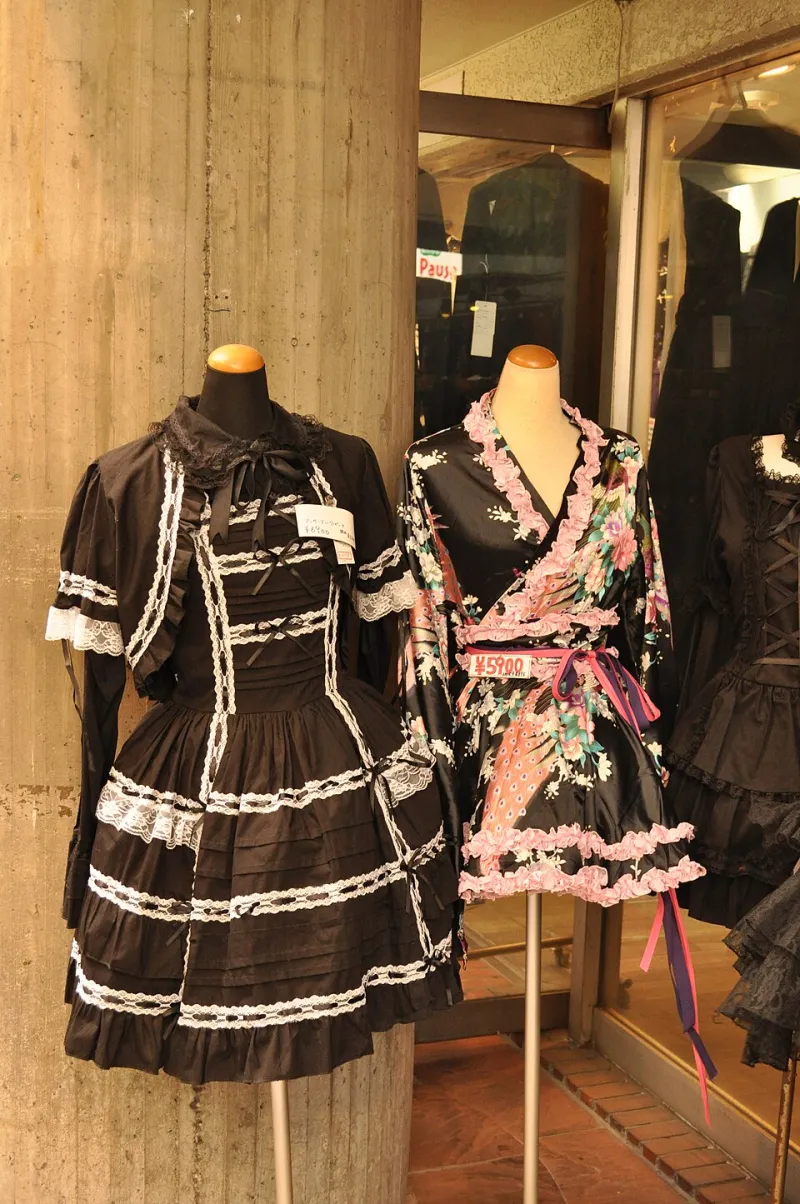
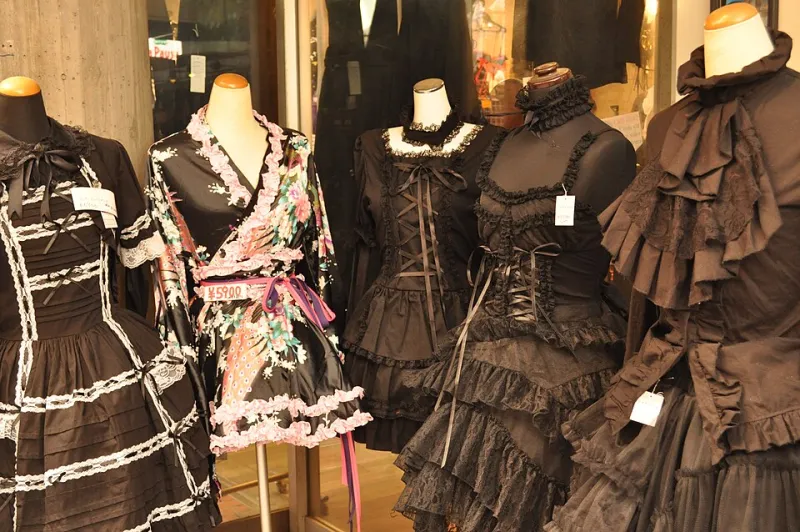
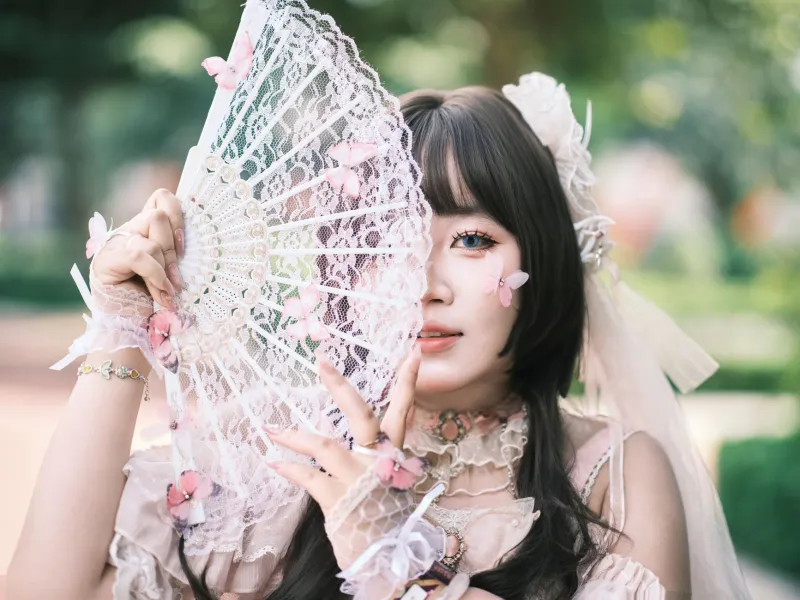
Goth loli, at its core, is a direct rejection of the idea that beauty should be invisible. The entire aesthetic celebrates the work: the layers of crinoline, the hand-sewn lace trim, the perfectly coordinated bonnet, the dramatic eye makeup that took forty-five minutes and was worth every second. It doesn't pretend. It performs — and it does so with complete, unapologetic pride.
Artifice as Authenticity
Here's the philosophical flip that goth loli pulls off that mainstream culture can't quite wrap its head around: being theatrical is being authentic. The idea that "real" beauty means looking unpolished and natural assumes that your most genuine self is your most unadorned self. Goth loli communities have been pushing back on that assumption for decades.
Marceline, a 22-year-old from Portland who's been wearing gothic lolita for three years, put it plainly: "When I put on a coord, I feel more like myself than I ever did in jeans and a hoodie trying to look 'normal.' The artifice is the point. I'm not hiding behind it — I'm building something real with it."
That sentiment echoes across the community. For a lot of people, especially those who grew up feeling like their natural appearance was somehow wrong — too dark, too pale, too round, too angular, too other — goth loli offered a framework where you got to define the terms. You weren't failing to meet a standard. You were setting a completely different one.
This is a genuinely radical idea in a culture that still largely treats beauty as something you either have or don't, rather than something you create.
Youth, Femininity, and the Doll Aesthetic
One of the more nuanced conversations happening inside goth loli spaces right now is about the subculture's complicated relationship with youth and femininity. On the surface, some of the aesthetic touchstones — porcelain doll imagery, childlike silhouettes, the word "lolita" itself — can raise questions worth sitting with.
But here's what's interesting: the way the community actually engages with those elements is often deeply subversive. The "doll" isn't passive. She's armored. She's elaborate. She's chosen. Gothic lolita in particular takes the doll aesthetic and runs it straight through a dark forest — the sweetness curdles into something stranger and more powerful. You're not a doll to be looked at. You're a doll who decided she was done being decorative and is now running the haunted manor.
For many Gen Z wearers, that reclamation of femininity on their own terms is exactly the point. As Deja, a 19-year-old from Atlanta, explained: "Mainstream beauty tells me to be feminine in this very specific, palatable way. Goth loli lets me be feminine in a way that's dramatic and dark and mine. Nobody gets to tell me it's too much."
Too much. It's worth pausing on that phrase, because it comes up constantly in conversations about alternative fashion — and it's almost always being reclaimed rather than apologized for.
Maximalism as a Political Act
In an era of quiet luxury and minimalist aesthetics dominating high fashion, choosing maximalism isn't just a style preference. It's a statement. It says: I am not going to make myself smaller or quieter or easier to overlook. I am going to take up space — visually, culturally, physically — and I am going to do it with a petticoat that could survive a hurricane.
For Gen Z, a generation that came of age during a pandemic, a mental health crisis, and the slow collapse of several institutions they were told to trust, that kind of visible, defiant self-expression carries real weight. Hustle culture told them to optimize. Social media told them to curate. Beauty culture told them to conform. Goth loli said: what if you just didn't?
The psychological research on this is actually catching up to what the community has known intuitively for years. Studies on "enclothed cognition" — the way clothing affects how we think and feel about ourselves — suggest that wearing clothing that feels meaningful and intentional has measurable effects on confidence and self-perception. When you spend two hours building a coord that expresses something real about who you are, you walk differently. You exist differently.
Finding Your People, Finding Yourself
Maybe the most important thing goth loli offers isn't the aesthetic itself — it's the community built around it. In a mainstream beauty culture that's fundamentally competitive (who's prettier, who's thinner, who's aging better), goth loli spaces tend to operate differently. The culture of coord feedback, of sharing finds, of celebrating each other's creative interpretations, creates something that looks a lot more like collaboration than competition.
That's not to say the community is perfect — no community is. There are ongoing conversations about size inclusivity, about race and representation in a subculture with deep Japanese roots, about gatekeeping and elitism. The community is actively working through those tensions, which is itself a sign of a subculture that takes its values seriously.
But for a lot of Gen Z kids who grew up feeling like beauty culture was a game rigged against them, finding a space that says your intentionality is the point, your darkness is welcome, your maximalism is a gift — that's genuinely life-changing.
The goth loli lens doesn't just change how you dress. It changes how you see. And once you start viewing beauty as something you author rather than something you approximate, it's pretty hard to go back.
The ruffles help too.